Earthquake Damage
Serious earthquakes can strike anywhere without warning. When they do, the aftermath may be horrific. Catastrophic injuries from earthquakes may occur as a result of flying debris, collapsing walls, or falling objects. Earthquake victims fortunate enough to escape injury may still endure the trauma of confronting destruction of their homes and personal belongings.
Because mild earthquakes are common in California, most residents are aware of the safety measures to follow when the ground starts shaking. However, up to 90 percent of homeowners may face financial devastation after a major quake as a result of a lack of insurance coverage or the reluctance of their insurance company to pay their claim.
Assessing Earthquake Risk
The risk of a catastrophic earthquake varies widely across the United States. The closer you live to a fault, the higher your risk of experiencing an earthquake. A fault is a fracture between two plates in the earth’s crust; these plates are constantly in slow motion. The San Andreas Fault in California is the boundary between the Pacific Plate and the North American Plate, which move past each other at approximately 1.5 inches per year.
The three largest earthquakes in North America occurred in Missouri during a three-month period in 1811 and 1812. The highest number of large earthquakes per year occur in Alaska; however, most of the affected areas are uninhabited. California has the greatest frequency of damaging earthquakes because much of the population lives near a major fault.
Damage Caused by Earthquakes
Many Californians live near major faults capable of producing the most intense shaking, which can shift buildings off their foundations, throw off frame structures, and cause partial or total building collapse. Other specific types of property damage caused by earthquakes include the following:
- Cracks in walls and ceilings
- Weakening of foundations
- Destruction of landscaping and fencing
- Loss of personal belongings
- Vehicle damage
Small earthquakes happen about every other day in California. Although major earthquakes occur less frequently, the risk of disaster is always present.
Does Standard Homeowners Insurance Cover Earthquake Damage?
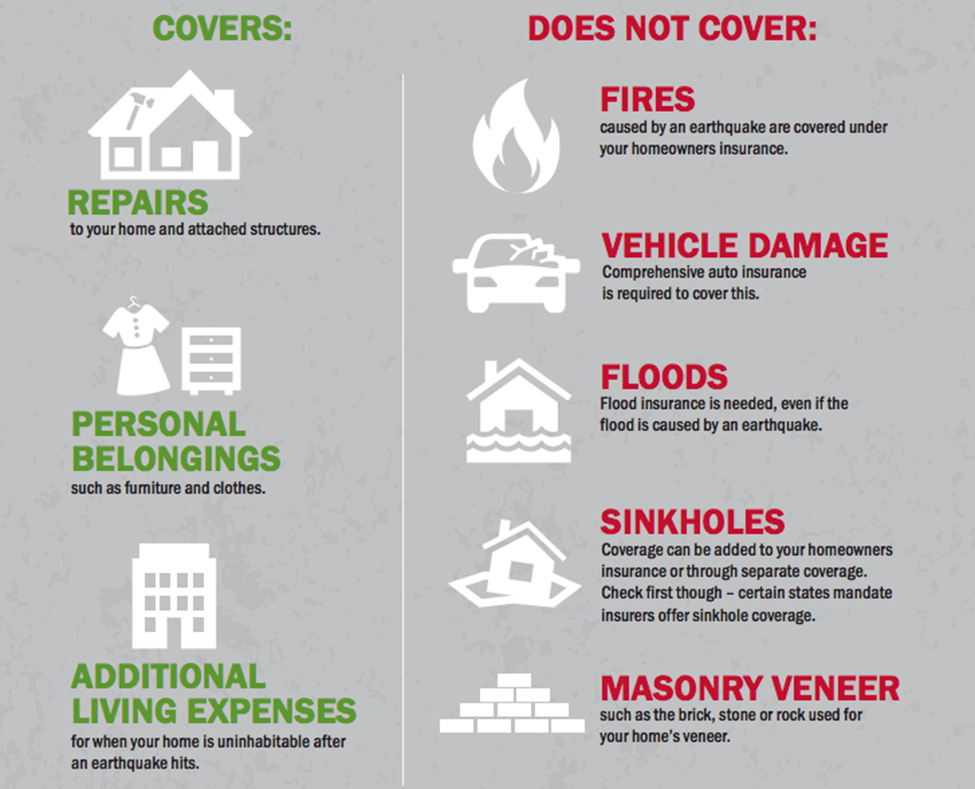
If you have a mortgage on your house, insurance law may require you to have homeowners insurance. However, most standard policies do not cover earthquakes or landslides. If your car is damaged in an earthquake, your car insurance may cover it, but only if you paid for comprehensive insurance.
When an earthquake destroys your house or compromises the integrity of its structure, the financial costs may include the cost of temporary living quarters and storage, as well as repairs to your home. It may be unsafe to live in your home for some time. If you live in an earthquake-prone area, you should consider purchasing a separate earthquake insurance policy, or getting a quote on an earthquake endorsement, which is an extension of your homeowners’ insurance.
Should I Buy Earthquake Insurance?
Earthquake insurance can compensate you if an earthquake damages your home or your personal property. However, it is expensive, which is why nearly 90 percent of California homeowners do not have earthquake insurance. If your homeowners policy does not cover earthquake damage and you live in a high-risk area, consider purchasing earthquake insurance. Much of California is considered high risk. Earthquake insurance may be worth the cost if you do not have the money to pay for the following:
- Repairing or rebuilding your house
- Replacing all your personal belongings
- Living in temporary housing and storing your furniture while your house is being rebuilt
The cost of earthquake insurance will vary according to the location and characteristics of your home. The cost will increase if any of the following is true:
- Your home has multiple stories
- The frame of your house is not made of wood
- Your home is on a slab foundation instead of a raised one
- Your home sits on clay or rock as opposed to sandy soil
Earthquake insurance will also be more expensive if your home is older and has not been retrofitted to withstand an earthquake.